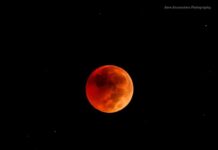


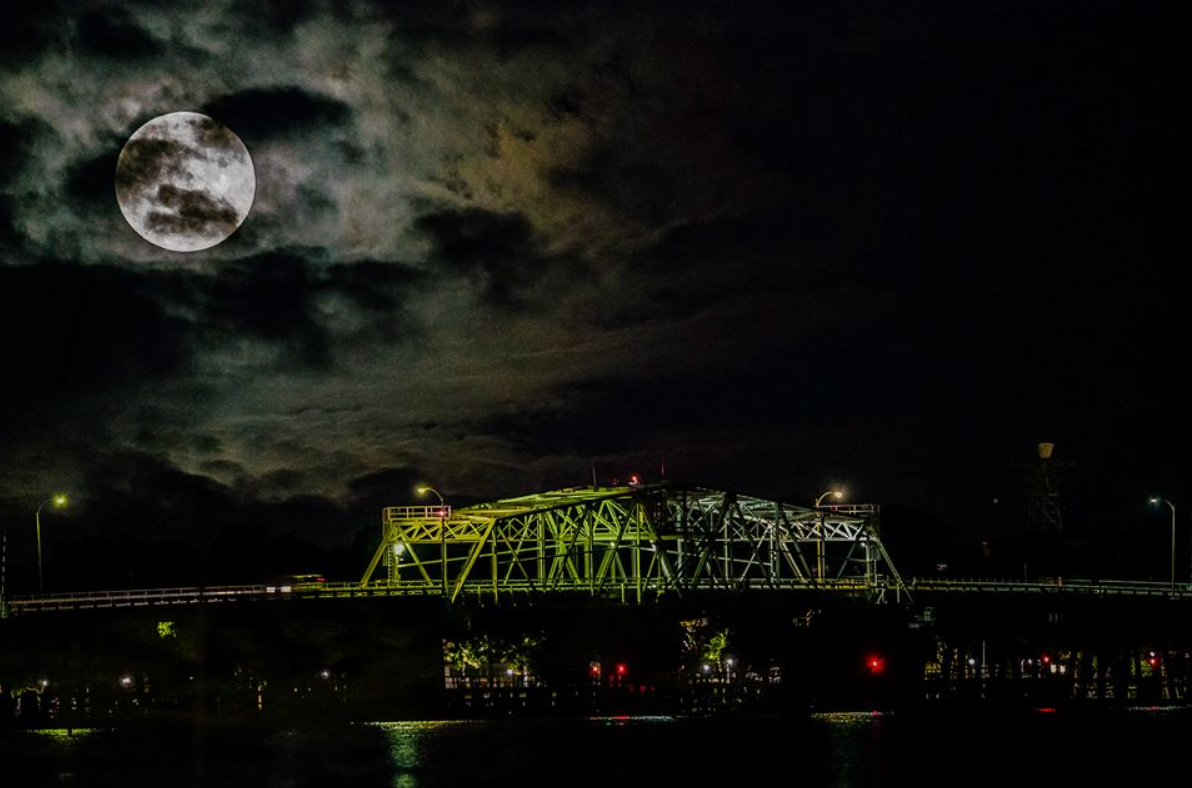
Take a look up to the heavens next week and you’ll see the first supermoon of the year light up the sky over Beaufort, SC. October’s harvest moon will be the next full moon and it will be the first supermoon of 2025, making it the largest and brightest full moon of the year, illuminating the sky for several nights.
The moon will be at it’s fullest starting on Monday, October 6, 2025 at 11:48 p.m
The October full moon will orbit closer to Earth than all the other full moons this year so far, making it a special supermoon that will appear the biggest, brightest and most golden of 2025, giving stargazers a special sight to remember.
The harvest moon is also different from all other full moons in that it isn’t tied to a particular month, but rather to the timing of the autumnal equinox, which can happen either in September or October.
In any typical year the September full moon is known as the corn moon and the October full moon is known as the hunter’s moon, however every year one of these — depending on which falls closer to the timing of the autumnal equinox — becomes the harvest moon.
It will be the first of three supermoons this year. he three supermoons in 2025 will occur on October 6, November 5, and December 4. These will be the Harvest Moon, the Beaver Moon, and the Cold Moon, respectively
What sets the Harvest Full Moon apart from other full moons is that farmers, at the height of the harvest season, can work late into the night because the moon’s light becomes so bright and it also rises about the time the sun sets, offering the maximum time for their harvesting work to be done.
Supermoons by definition happen “when a full moon coincides with the Moon’s closest approach to Earth in its elliptical orbit, a point known as perigee,” according to NASA.
“During every 27-day orbit around Earth, the Moon reaches both its perigee, about 226,000 miles (363,300 km) from Earth, and its farthest point, or apogee, about 251,000 miles (405,500 km) from Earth.”
Supermoons in general appear 17% bigger and 30% brighter than when the moon is at its farthest point away from Earth, according to NASA. Supermoons are slightly bigger and brighter than most full moons, too. Just because it’s bigger and brighter doesn’t necessarily mean you’ll see it unaided, so binoculars may give you a better view.
You’ll be able to step outside and enjoy the view with the supermoon brightly illuminating our early autumn evening sky.
Enjoy the view, Beaufort, SC!