

Tales of history, architecture and turtle bones will take center stage October 19th with Historic Beaufort Foundation’s Sunday Brunch lecture and tour at the Means-Gage House on the Beaufort River bluff. A big part of the annual HBF Fall Festival.
Archeological investigation has revealed two pre-Civil War privies, and more recently, an 18th-century well, on the property yielding thousands of artifacts, porcelains, pottery shards and turtle shells – most likely signs that early residents ate a lot of easily-available turtle meat.
Property owners Catherine and Wallace Scarborough will share their findings and experiences alongside acclaimed Beaufort and Lowcountry historian Dr. Lawrence S. Rowland at the special brunch event Oct. 19.
This event is divided into two sessions – 9-11 a.m. and 11:30 a.m. to 1:30 p.m. Please contact the HBF Office at 843.379.3331 or by email to info@historicbeaufort.org to reserve your spot at the brunch or other events in the HBF Fall Festival of Houses and Gardens.
Tickets are selling fast.
The brunch is part of the weekend-long Fall Festival of Houses & Gardens, Oct. 17-19 that includes a Friday evening talk by acclaimed Beaufort architect and author Jane Frederick, a Saturday tour of Bluff homes, a Saturday early evening sneak-peak of HBF’s recently-acquired house at 1001 Greene Street, and the Sunday Lowcountry Brunch at the historic Robert Means-Gage House overlooking the Beaufort River.
“We are grateful to the many property owners who are opening their homes and sites in support of our annual fall tour and HBF’s mission to preserve and protect Beaufort’s historic and architectural heritage,” said Lise Sundrla, HBF executive director.
“Wallace and Catherine’s commitment to researching and preserving these unique archaeological discoveries, and their willingness to share their knowledge with our tour-goers, is greatly appreciated,” Sundrla said.
Over the past 20-plus years, the Scarboroughs have discovered pottery shards, coins from other countries, broken dishware and turtle shells in the area where outdoor toilets once stood.
“The archaeological discoveries at 1207 Bay Street in Beaufort have unveiled a vivid tapestry of history, connecting us to the lives of its Federal-era residents,” owner Wallace Scarborough said. “We excavated two brick-lined privies, each roughly 8 feet by 10 feet wide and 10 feet deep.
“The first privy was uncovered in the 1990s, prior to our 2016–2018 historic renovation, under State Archaeologist Chester DePratter’s supervision,” he said. “This dig revealed artifacts like turtle bones, 19th-century dominos, mocha ware, and colonoware, now displayed in our home.
“During the 2016–2018 renovation, we discovered the home’s original subterranean cistern in the back-right basement, a stucco-lined masonry reservoir for rainwater, vital in antebellum Beaufort before piped water systems,” Scarborough said.
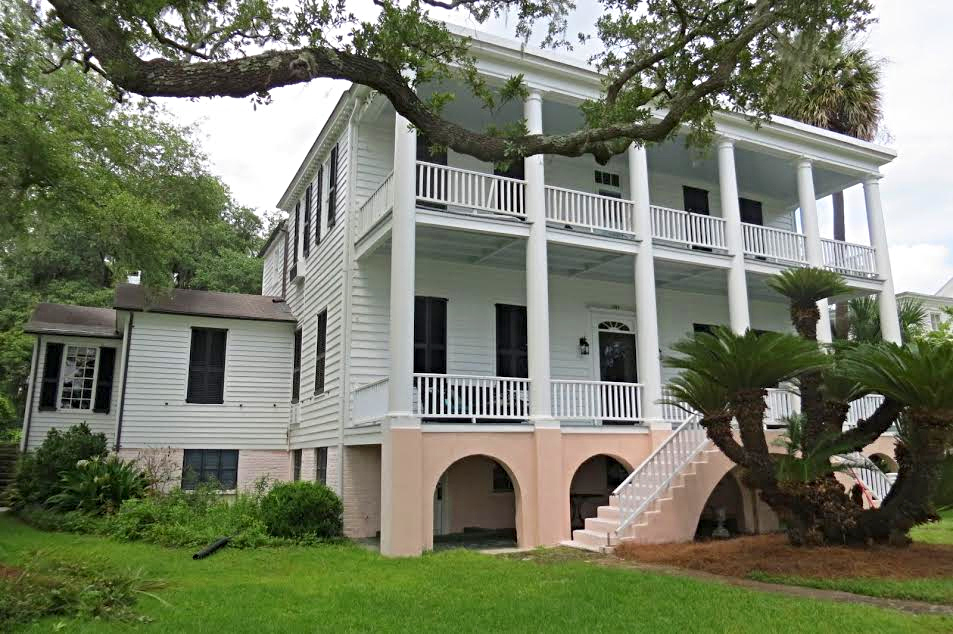
Tour goers on Oct. 19 will experience a southern brunch prepared by Lowcountry Produce Market & Cafe and an exclusive tour of one of the few surviving pre-Civil War houses remaining in Beaufort. Built for wealthy merchant and Parris Island farmer Robert Means, the house represents the types of houses built from wealth created by the first Sea Island cotton boom.
An outstanding example of The Beaufort Style of architecture, the house was constructed on a raised tabby Foundation, in a T-shape with two front entertaining rooms, a central stair passage and secondary back rooms that extend beyond the sidewalls of front block of the house.
It is one of the most intact examples of Federal era architecture in the town of Beaufort, and the least altered in the Bluff neighborhood, with a high level of integrity on the interior. The house also features a two-story front porch with large Tuscan columns, which were added by George Gage during the height of Revival style ornamentation in the late 19th century.
“Most recently, while looking for our water line, we uncovered an 1800s refuse pit and, further enriching the property’s archaeological record,” Catherine Scarborough said. “We excavated the privies with care, using brushes and small spades to gently remove dirt, preserving the artifacts and their historical context. Each discovery, from the cistern to the well and refuse pit, has deepened our understanding of the lives lived here centuries ago.”
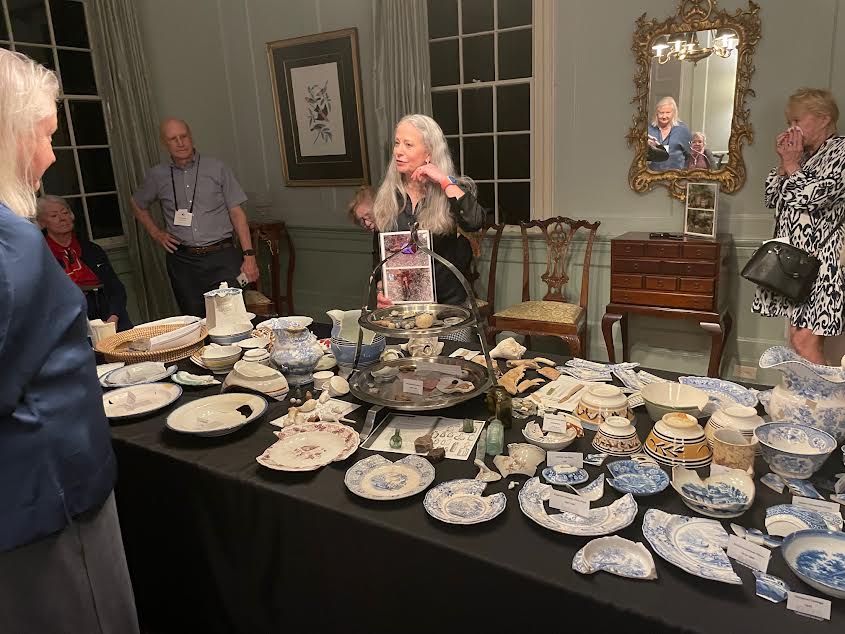
She said some of the discoveries are clear indicators of how Beaufort residents of the early 1800s thrived on local foods and catches.
“The turtle shells, wild boar, oyster, fish, cow, and chicken bones revealed a rich Lowcountry diet, reflective of Beaufort’s coastal abundance,” she said. “A delightful surprise were the coins we found: a Mexico Spanish Colonial (1790), Liberty 13 Stars (1821), Russian Empire Nicholas I (1841), and 1/2 Dram (1847). These coins, spanning decades and continents, suggest Beaufort’s global trade connections. The Russian Empire coin, in particular, hints at far-reaching maritime networks.”
George Gage, an Ohio native and later chief engineer of the Port Royal Railroad, bought the house in 1872. Gage was also a prominent Republican who lost out to Robert Smalls in the selection of a new Collector of Customs in 1889.
The house remained in Gage’s family until 1919, when it was sold to Maj. Edward Denby of Michigan. Denby was appointed Secretary of the Navy under President Warren G. Harding and was among the cabinet members accused in the Teapot Dome scandal of 1923. The well-proportioned, two-story verandah was added by Denby.
“We view ourselves as custodians of this home, entrusted with its care for future generations,” Wallace Scarborough said. “This house, enduring 235 years of wars, hurricanes, and economic shifts, embodies Beaufort’s resilience from its Federal-era prosperity to Reconstruction and beyond.
“With 80–85 percent of its interior and exterior original — including heart pine floors, Adam mantels, and the Beaufort-specific T-plan — we prioritize and take pride in its authenticity. We highlight the home’s ties to Beaufort’s port, where Gage served as Port Collector.
“It is our aim is to ensure this home stands another 235 years helping to preserving the Beaufort Historic District,” he said. “The Beaufort historic District is vital to safeguarding the town’s cultural and architectural heritage, and our home is a cornerstone of that legacy. We often joke that, of all our accomplishments, our stewardship of this house will be our most enduring legacy.”
The wide entrance hall has a drawing room on the right and a dining room on the left, both fully paneled. Each has Adam-style mantels and original molding. A mahogany stair rail with slender balusters leads to a landing and a sitting room, then continues to two bedrooms on the second floor. A Palladian window overlooks the garden in the rear.
“The home reflects Beaufort’s golden age and Reconstruction vibrancy. Gage’s mother, Frances “Fanny” Gage, an abolitionist, worked with Clara Barton, and George’s 1893 letter to Barton requesting a Sea Islands survey post-hurricane highlights their relief efforts,” Catherine Scarborough said.
“Architecturally, it stands as a rare example of Federal design; socially, it has been a gathering place for influential figures; and culturally, it embodies the Lowcountry’s rich history,” she said. “We feel profoundly blessed to be the current stewards of this remarkable home, ensuring its legacy endures.”
Visit Historic Beaufort Foundation to get your tickets for this year’s Fall Festival of Houses & Gardens.