


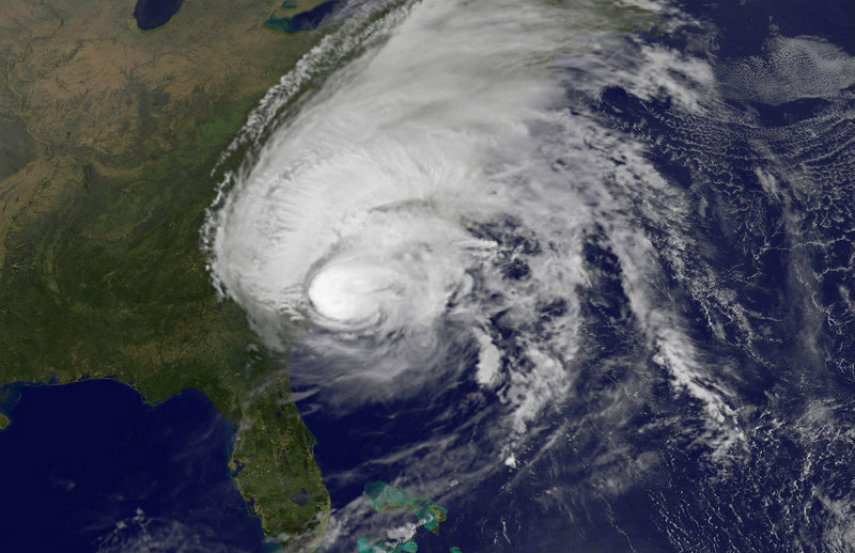
Forecasters with Colorado State University have released their report and they are predicting a below-average Atlantic hurricane season in 2026 with as many as only 6 hurricanes forming, meteorologists with CSU said this week.
Researchers said there is a below-average probability for major hurricane landfalls along the continental United States coastline and in the Caribbean.
That’s certainly good news.
Experts at Colorado State University’s Tropical Cyclones, Radar, Atmospheric Modeling and Software team estimate that 6 hurricanes will occur over the course of the upcoming season, with 13 named storms overall.
The season begins June 1st and runs through November 30th. An average season typically gives us seven hurricanes and peaks in August and September.
Two of the 2026 hurricanes are predicted to be major Category 3, 4 or 5 storms, a 50% reduction from the 2025 forecast, which predicted four.
Category 3 hurricanes are those with sustained winds that reach 111 to 129 miles per hour, enough to cause devastating damage. Category 4 hurricanes have sustained winds of 130 to 156 mph, and the most catastrophic Category 5 storms reach 157 mph or higher.
Usually starting out as Tropical storms, which contain wind speeds of 39 mph or higher, tropical storms become hurricanes when winds reach 74 mph.
The forecast points to current weak La Niña conditions which are likely to transition to El Niño in the next few months, with the potential for a moderate/strong El Niño for the peak of hurricane season.
Researchers say that the sea surface temperatures in the western tropical Atlantic are warmer than normal but slightly cooler than normal in the eastern and central tropical Atlantic. Researchers anticipate El Niño being the dominant factor for the upcoming hurricane season, driving increased levels of tropical Atlantic vertical wind shear.
El Niño, a natural warming of ocean water in the tropical Pacific Ocean, tends to suppress Atlantic hurricane activity. It’s opposite, La Niña, a cooling of that same water, usually boosts the number of hurricanes in the Atlantic.
The NOAA forecast comes out in May, and the early April forecast is the earliest seasonal forecast issued by Colorado State University and has modest long-term skill. The skill of CSU’s forecast updates increases as the peak of the Atlantic hurricane season approaches.
They also present probabilities of exceedance for hurricanes and Accumulated Cyclone Energy to give readers a better idea of the uncertainty associated with these forecasts.