

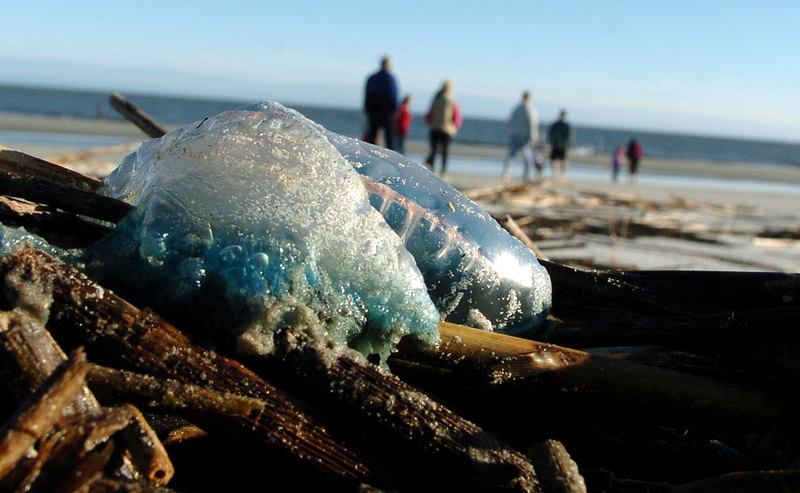
Highly venomous Portuguese man o’ war have arrived on our local beaches and beachgoers should look out for them.
A small number of Portuguese man o’ war, which are marine hydrozoans, have recently been reported as being seen on South Carolina beaches.
“You should steer clear of these highly venomous relatives of jellyfish both in the water and ashore, as even a dead man o ‘war has a sting strong enough to sometimes require medical attention. Fortunately, the bright blue ‘float’ of a man o’ war makes them easy to recognize and avoid,” SDNR says about the poisonous creatures.
DNR said the man o’ wars are pushed ashore by strong winds. They have recently washed onto beaches from Florida up to North Carolina.
At least one was seen along the beach at Hunting Island State Park on over the weekend. Here’s a photo of it by Donald Holder. See original post.
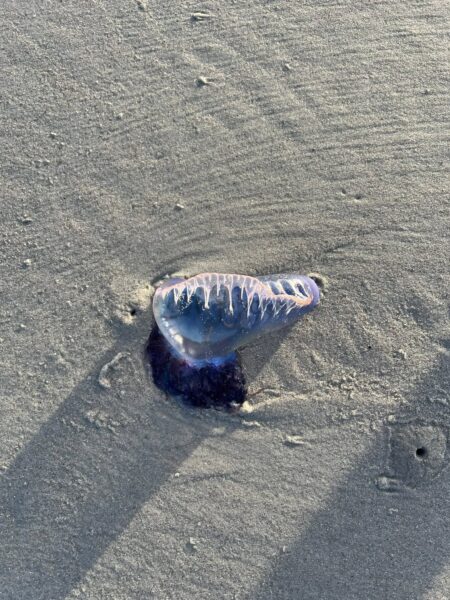
Portuguese man-of-wars can be 12 inches long and 5 inches wide with tentacles as long as 165 feet.
The tentacles are the second organism of the man-of-war. The tendrils are covered in venom-filled nematocysts that are used to paralyze and kill fish and other small creatures.
Detached tentacles, which can sometimes be clear and hard to see, can sting just as painfully as the live organism in the water and may remain potent for hours or even days after the death of the organism or the detachment of the tentacle.
The sting to humans is excruciatingly painful but rarely deadly.
Nobody goes to the beach to get hurt….so keep your eyes open.
Find more info on the SCDNR website.